
Tech #776: Inhibitors of ILK:α-parvin as novel therapies for heart failure and cardiac fibrosis
Heart failure remains a leading cause of death and hospitalization in the developed world, with current treatments failing to reverse organ dysfunction or address untreatable cardiac fibrosis. The Coles and Maynes labs at SickKids are targeting the integrin-based mechanotransduction pathway—specifically the interaction between ILK and parvins in cardiomyocytes and fibroblasts—to develop novel therapeutics that address the root mechanisms of heart failure and fibrosis.
IP&C is seeking an industry partner to complete development & commercialize this therapeutic.
Technology Reference Number
#776
Inventors
IP&C Contact
Publications
Patents
Preparing to file a US provisional patent application
Category
Therapeutics
Keywords
Cardiac fibrosis, heart failure, cardiomyocyte, integrin-linked kinase, pathways, parvins
Background
Heart failure is a leading cause of morbidity and mortality globally, with a five-year mortality of 50% and high-risk of all-cause hospital admission and post-discharge readmission. In developed countries, heart failure affects 1-2% of the adult population. The direct cost alone of heart failure is projected to increase to $142 billion by 2050 in the USA, with additional indirect costs. Current pharmacological management remains largely restricted to neurohormonal and symptomatic pathways, where clinical efficacy is frequently restricted by dose-limiting hypotension rather than achieving true functional organ restoration. They do not restore cardiomyocyte survival or effectively modulate fibrotic remodeling; consequently, the disease remains a progressive condition characterized by high mortality.
Integrin-linked kinase (ILK) is a key cardiac scaffolding protein involved in heart development, the transduction of mechanical stress between the extracellular matrix and the intracellular cytoskeleton, and the induction of pathways that promote cardiomyocyte survival.
Invention Description
The Coles and Maynes labs at SickKids have identified unique mechanisms involved in cardiomyocyte and fibroblast mechanotransduction (mechanical force sensing), targetable for the development of novel therapeutics for heart failure and cardiac fibrosis.
Their work focuses on the key interaction between the proteins ILK and parvins (α-parvin and β-parvin), which form a heterodimeric complex as part of the integrin-based mechanotransduction pathway present in both cardiomyocytes and fibroblasts.
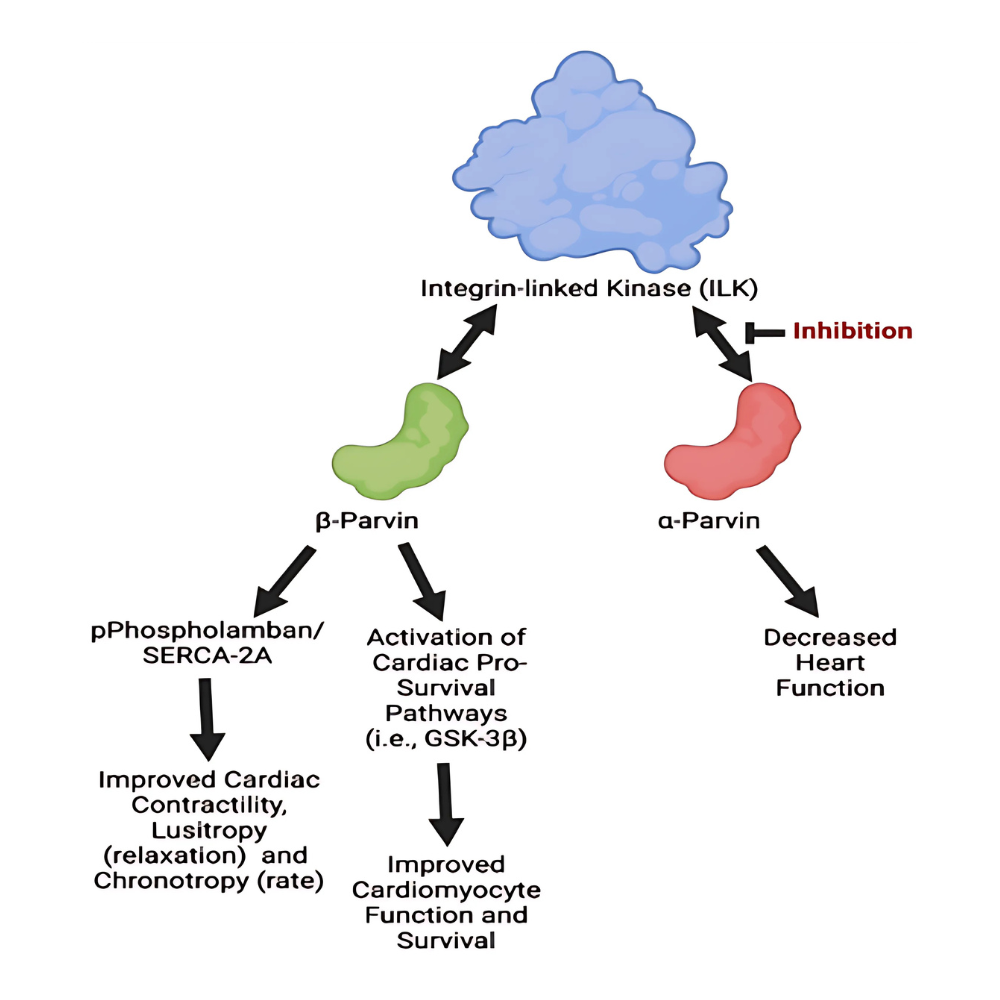
Figure 1.
ILK-parvin interaction and its effect on cardiac function and survival.
These protein:protein interactions regulate the actin cytoskeleton, calcium dynamics, and the activation of pro-fibrotic pathways. ILK-β-parvin interaction activates sarcoplasmic reticulum ATPase (SERCA- 2a), enhancing calcium reuptake into the sarcoplasmic reticulum and preventing cytosolic calcium overload, a feature of advanced heart failure. This interaction also induces cardioprotection by stimulating myocyte growth and preventing myocyte death, In contrast, ILK–α parvin binding reduce contractility and myocyte survival while promoting fibrosis. They showed that inhibiting ILK:α-parvin binding rescues cardiac function, highlighting a novel therapeutic target for the treatment of patients with heart failure and fibrosis.
Commercial Applications
- First-in-class drug targeting mechanotransduction pathways to treat cardiac fibrosis and heart failure.
- Owing to the importance of force sensing, inhibitors of the ILK:α-parvin interaction could be potentially developed as therapies for treating other diseases: arrhythmia, cancer.
Developmental Stage
A high-throughput screen (HTRF assay) was designed and implemented at Evotec SE to identify small molecule disruptors of ILK: α-parvin complexes. The HTS yielded ~30 compounds that showed acceptable potency (4µm – 60µm), tractability to medicinal chemistry enabling further optimization of promising compounds and limited or modifiable toxicity.
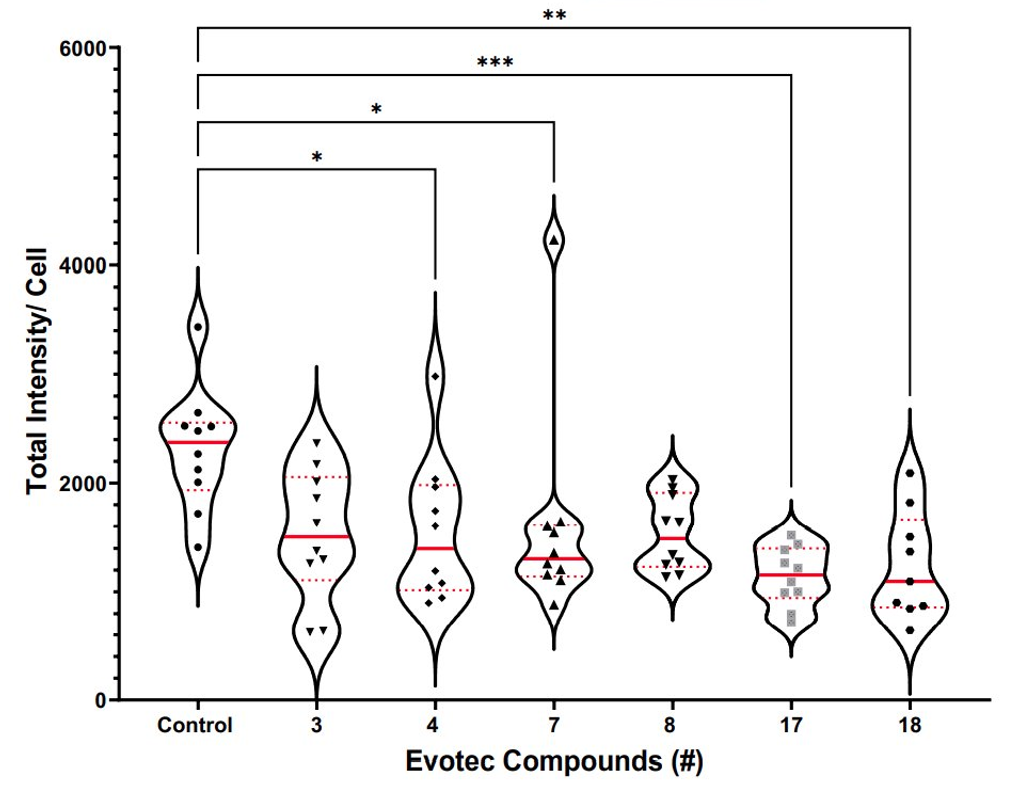
Figure 2.
HTS hit compound in cellulo validation, showing reduction of ILK:parvin cellular complexes in cardiac fibroblasts indicated by reduction in proximity ligation assay signal (six compounds at 20uM).
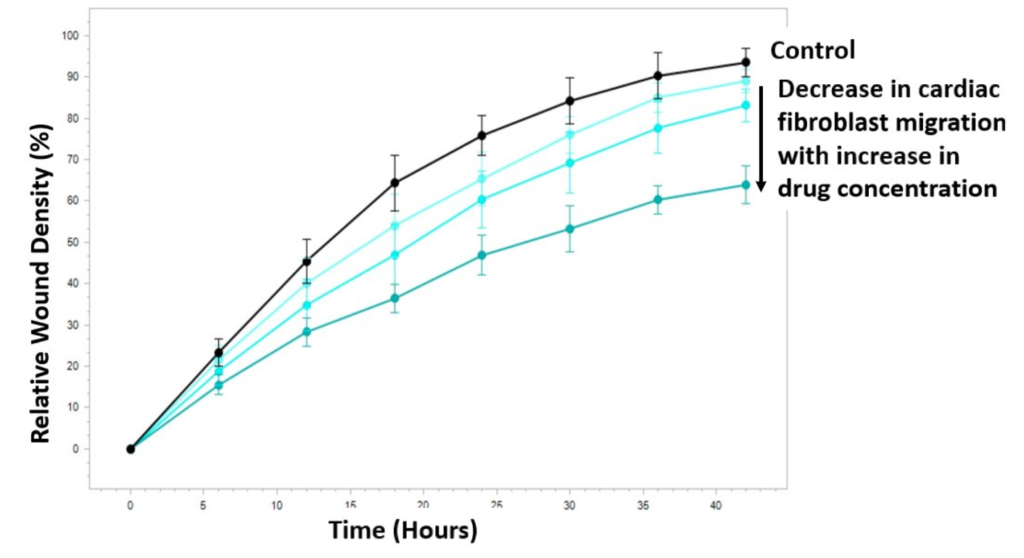
Figure 3.
Diminished cardiac fibroblast migration with increase in compound concentration (single HTS hit shown).
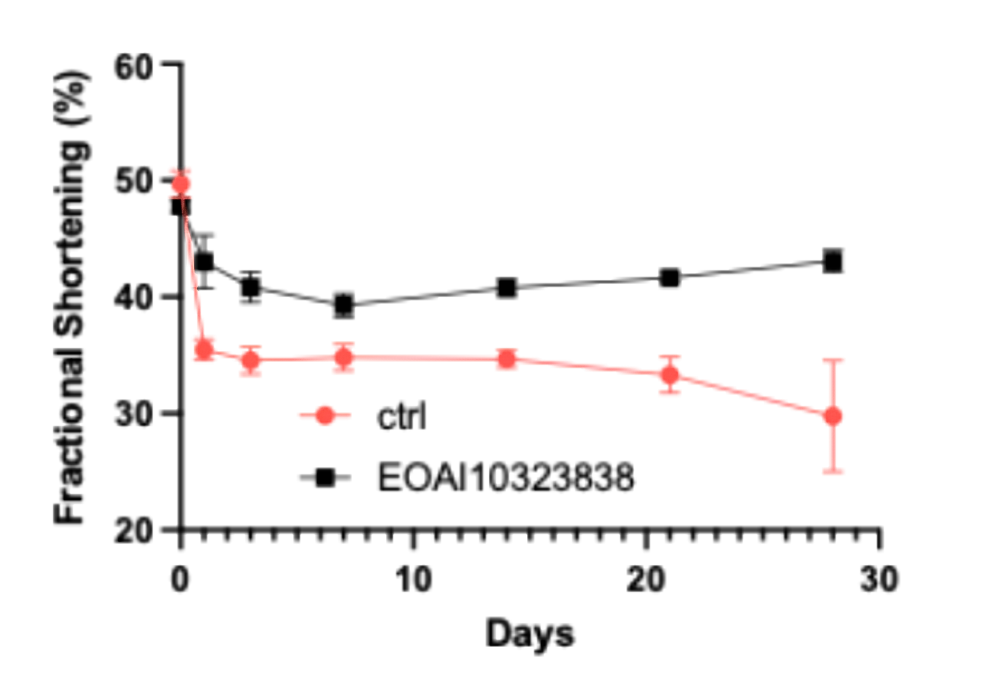
Figure 4.
Early proof-of-concept in left anterior descending (LAD) ligation rat model. Intracardial injection of our ILK:aParvin inhibitor, EOAI10323838, into the peri-infarct region at time of ischemic injury improved cardiac function 28 days after ischemic injury in myocardial infarction rat model. Left ventricular functional improvement (fractional shortening, end systolic dimension, and end diastolic dimension) and reduced tissue fibrosis observed.
Preliminary results have identified promising compounds that disrupted ILK: α-parvin complexes (Figure 2), decreased cardiac fibroblast migration (Figure 3) in a concentration dependent manner, and improved cardiac function while reducing fibrosis in an in vivo myocardial infarction model (Figure 4). Medicinal chemistry activities have refined the hits towards a common central pharmacophore and area of binding on α-parvin. Resulting in short listed molecules with single digit µM binding and ability to disrupt the ILK:α-parvin complex (measured via multiple orthogonal assays) and favorable ADME/Tox characteristics.
